The Sound of Movement: What Dance Teaches Us About Listening
Introduction: Deep Listening
The composer Pauline Oliveros wrote that “Listening is directing attention to what is heard, gathering meaning, interpreting and deciding on action.” Her practice of Deep Listening invites people to tune into all the sounds around them, not only the obvious melody or beat but also the vibrations, silences, and hidden textures that usually go unnoticed. Deep listening is about expanding awareness, receiving sound with your whole body, and allowing it to guide you.
For me, that idea stretches beyond the ear. As a performer who grew up being told I was off beat, tone deaf, and unable to find the rhythm, I learned to listen differently. Sometimes rhythm comes in through the spine or the breath before it ever lands as a number to count. Oliveros’s practice reminds me that sound is not just heard, it is felt.
In Dance Church, this kind of listening is everywhere. It lives in the sound of collective breathing when there are three seconds of silence between songs. It vibrates through the ground when we smack the floor in unison. People are not always on the same beat, yet the room still pulses together. Deep listening means trusting that each way of receiving sound is valid. When I let my body listen in its own way, movement itself becomes another form of hearing, and that is where the freedom begins.
Music as Unlocking the Body
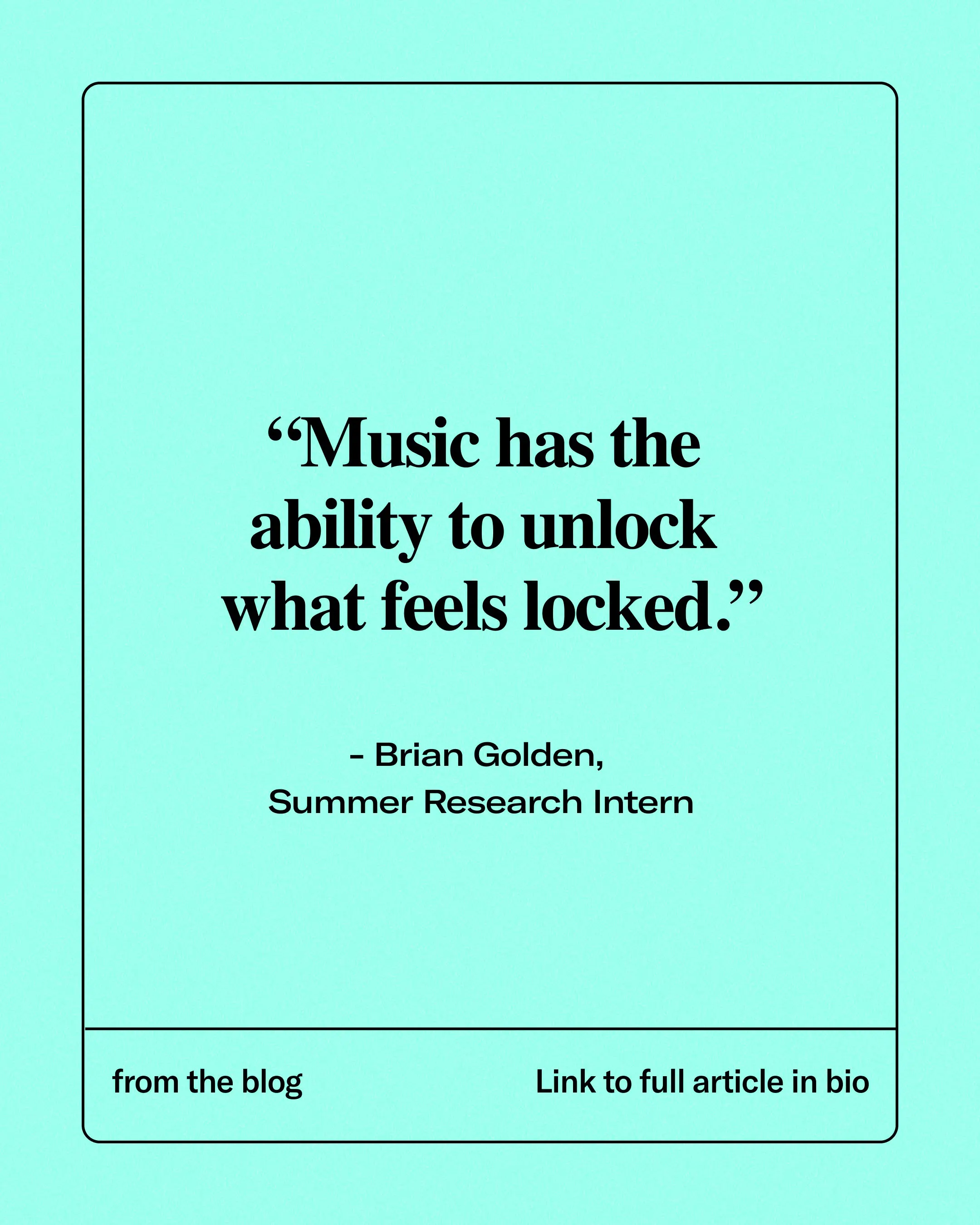
At the start of class people often move with a kind of hesitation, like they are testing the water with their toes before diving in. But as the music builds, something loosens. Fingers twirl, spines ripple, effort levels shift. It is as if a light switches on inside the body. Music has that ability to unlock what feels locked.
Rhythm can feel like math, something predictable you can learn to anticipate. Music, however, is a rollercoaster with sudden drops, sharp turns, and surprises that keep the body alert. A song holds you at the top of a climb, then suddenly drops you, turns you sideways, throws you into a tunnel of sound. When that happens, bodies respond. They pivot, they drop, they release. The beat gives us scaffolding, and the turns surprise us into freedom.
Music as Energy Shifter
Music also has the power to change the temperature of a room. For example, when Dance Church did an outdoor class at Lincoln Center, after five quick upbeat songs the guide, Thomas, chose to play “Like a Prayer” by Madonna. It was the version from the Deadpool movie with a choir and an orchestra. The shift was immediate. The crowd that had been buzzing with speed suddenly slowed. The air felt different, as if everyone exhaled at once.
This is what music can do. It does not only set a beat, it carries memory, nostalgia, emotion. It reminds you of a car radio in high school, or your parents’ favorite song, or a night out at a club shifting your weight side to side. Rhythm anchors you, but emotion lifts you. The pulse is the ground and the feeling is the wave.
In Dance Church the music does not only move individuals. It can reset the collective body. One track can dissolve exhaustion, another can spark a room into joy. Music exists in the air, but it is made real in the way we receive it. Nature sings with birds, humans sway when they are happy, and somewhere in between music becomes both structure and release.
A Rainbow of Music
Every Dance Church class has its own weather system, and the playlist is the sky it moves under. The teacher curates songs like a rainbow, making sure there are different shades and textures so the room never feels flat. One track might be bright and playful, another dark and grounding, another soft like a pastel wash.
To me this rainbow approach is an act of care. It recognizes that not everyone in the room hears or feels music the same way. Some connect to lyrics, some to rhythm, some to mood. By offering a spectrum, teachers create space for everybody to find their own color.
Personal Reflection: Listening Differently
Neurodivergence taught me to listen to my body in unconventional ways. Sometimes that means slowing down when others speed up. Sometimes it means letting movement arise from image or emotion, not just music. Auditory processing disorder taught me that sound can be felt just as much as it is heard, and that rhythm doesn’t always enter through the ears.
What I’ve learned is this: my body isn’t late. It is just listening differently. You can land on the downbeat, follow the teacher’s phrase, and count numbers for beats. But what happens when your body hears the beat differently, or doesn’t locate it at all? When your ears register the sound but your body takes the long way to respond?
For years I thought that made me broken. I tried to fix my body. Quiet it. Force it to match others. When that didn't feel right I chose to make up movement first and then layer music on top of it, like scoring a film after the scene has been shot. It was a way to protect myself. If I didn’t try to be musical, I couldn’t fail at it.
And for a long time, that worked. It even became a principle of my creative practice. But I realized I was also boxing myself in. By avoiding music as a core collaborator, I was shutting out a vital part of myself as an artist. The way my brain processes rhythm and phrasing is unique, not broken. And hiding from that has limited my growth.
So now, one of my goals is to create with music, not in spite of it. To let it feel good, even if it is messy. To listen, respond, and allow the dance to be shaped by the beat instead of avoiding it. That is my new kind of Permission Workout. Letting the music in is its own kind of risk. But like Dance Church reminds me every time, the reward is in the release. ⭐️
Brian Golden is a neurodivergent choreographer and movement director based between Los Angeles and New York. He is pursuing an MFA in Choreography at the California Institute of the Arts, with minors in Pedagogy and Integrated Media. A 2024 MAP Fund recipient, he will premiere a new immersive work in 2026. His choreography explores conflict, sensation, and identity through lived experience. His work has been presented at The Joyce Theater, Battery Dance Festival, and Jacob’s Pillow. He has choreographed commercially for artists like Yung Gravy and Daddy Yankee and was the 2024 Choreography Fellow with AXIS Dance Company.